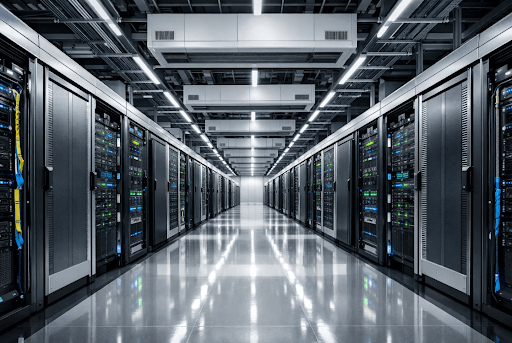
Hyperscale cloud data centers are no longer just massive rooms filled with servers. They are highly intelligent, performance driven ecosystems designed to support AI workloads, real time analytics, global SaaS platforms, and always on digital services. As cloud providers race to scale faster while reducing operational risk, infrastructure decisions made today must remain relevant for years to come. At the heart of this transformation lies one critical component that often determines efficiency, scalability, and reliability: Server Rack Solutions.
Modern data centers demand far more than simple metal frames to hold equipment. They require racks that support extreme power densities, advanced cooling architectures, automation readiness, and seamless integration with next generation hardware. In this in depth guide, we explore how future ready rack designs are shaping hyperscale cloud environments and what decision makers must consider when building infrastructure that can evolve with technology rather than fall behind it.
Why Hyperscale Data Centers Need Advanced Server Rack Solutions
Hyperscale cloud providers such as AWS, Google Cloud, and Microsoft Azure operate at a scale where even small inefficiencies multiply into massive costs. Traditional racks designed for enterprise environments struggle to meet the demands of hyperscale operations.
Modern Server Rack Solutions are engineered to support dense compute, high throughput networking, and accelerated hardware like GPUs and AI processors. Brands like Dell Technologies, HPE, and Supermicro now design servers that push power and thermal limits, making rack level design more critical than ever.
Moreover, hyperscale environments prioritize rapid deployment and standardization. Racks must support preconfigured modules, factory integrated systems, and consistent layouts across multiple facilities. As a result, rack architecture directly impacts deployment speed, maintenance workflows, and long term scalability.
Power Density and Thermal Efficiency as Core Design Drivers
One of the defining characteristics of hyperscale cloud data centers is extreme power density. Traditional racks designed for 5 to 8 kW loads are no longer sufficient. Modern deployments often exceed 20 kW per rack, with some AI focused clusters reaching 40 kW or higher.
High Density Power Distribution and Rack Design
Future ready Server Rack Solutions integrate intelligent power distribution units that provide real time monitoring, load balancing, and remote management. Vendors such as Schneider Electric, Vertiv, and APC by Schneider Electric offer rack systems that include smart PDUs capable of tracking energy usage down to individual outlets.
This level of visibility helps hyperscale operators optimize power usage effectiveness and proactively address imbalance issues. Additionally, rack frames are now reinforced to handle heavier equipment, including GPU servers and liquid cooling manifolds.
Advanced Cooling Integration at the Rack Level
As power density increases, cooling becomes a primary constraint. Hyperscale data centers are rapidly adopting direct to chip liquid cooling, rear door heat exchangers, and hybrid air liquid cooling designs.
Rack systems must be designed to support these technologies without costly retrofits. Future oriented racks feature wider frames, enhanced airflow paths, and built in support for liquid cooling connections. Brands like Vertiv and Rittal have pioneered rack designs that integrate seamlessly with liquid cooling infrastructure, reducing thermal hotspots and improving overall efficiency.
Modular and Scalable Architectures for Rapid Expansion
Hyperscale growth is rarely linear. Cloud providers often need to scale capacity rapidly to meet demand spikes driven by AI adoption, seasonal usage, or new service launches. This makes modularity a core requirement.
Standardized Rack Footprints Across Facilities
Future ready Server Rack Solutions emphasize standardized dimensions, mounting patterns, and cabling layouts. This standardization allows operators to replicate deployments across global facilities with minimal customization.
When racks are designed with consistent footprints, procurement becomes simpler, spare parts inventory is reduced, and technician training becomes more efficient. Companies like Google and Meta have long embraced standardized rack designs to enable rapid expansion across regions.
Preconfigured and Factory Integrated Rack Systems
Another trend shaping hyperscale deployments is the shift toward factory-integrated racks. Instead of assembling racks on site, hyperscale operators increasingly rely on vendors to deliver fully populated and tested rack systems.
This approach reduces deployment time, minimizes installation errors, and improves time to revenue. It also aligns with the growing demand to buy Server Racks in bulk from trusted suppliers who can meet strict quality and consistency requirements at scale. By sourcing pre-integrated racks, cloud providers can accelerate data center builds while maintaining predictable performance.
Automation and Smart Infrastructure Readiness
Automation is a defining feature of hyperscale operations. From automated provisioning to AI driven monitoring, data centers are becoming increasingly autonomous. Rack infrastructure must support this evolution.
Sensor Enabled and Intelligent Rack Systems
Modern Server Rack Solutions incorporate sensors that monitor temperature, humidity, airflow, and vibration. These sensors feed data into centralized management platforms, enabling predictive maintenance and real time optimization.
Brands such as Vertiv and Schneider Electric offer rack ecosystems that integrate with data center infrastructure management software. This integration allows hyperscale operators to correlate rack level conditions with server performance, power usage, and cooling efficiency.
Supporting Zero Touch Provisioning
Future ready racks are designed to support zero touch provisioning workflows. This means standardized cabling paths, color coded connections, and clear labeling that enables rapid installation with minimal human intervention.
In hyperscale environments where thousands of racks are deployed, even small reductions in installation time can translate into significant cost savings. Rack designs that prioritize automation compatibility play a critical role in achieving these efficiencies.
Network Density and Cable Management Excellence
Networking requirements in hyperscale data centers are evolving rapidly. High speed interconnects, including 400G and emerging 800G technologies, place new demands on rack design.
High Speed Networking Support
Server Rack Solutions must accommodate high density switches, fiber management systems, and structured cabling without obstructing airflow. Poor cable management can lead to thermal issues, signal degradation, and maintenance challenges.
Leading rack manufacturers now offer advanced cable routing features, including vertical and horizontal managers, tool less mounting systems, and dedicated fiber pathways. These enhancements improve airflow while simplifying troubleshooting and upgrades.
Preparing for Future Network Architectures
As hyperscale providers adopt disaggregated architectures and composable infrastructure, racks must remain flexible. This includes support for diverse switch placements, cross rack cabling, and evolving network topologies.
Future ready racks are designed with adaptability in mind, ensuring that network upgrades do not require complete rack replacement. This flexibility protects long term infrastructure investments.
Structural Strength and Equipment Protection
Hyperscale data centers house some of the most expensive computing equipment in the world. Racks must provide not only organization but also physical protection.
Modern Server Rack Solutions are engineered to support heavy loads, seismic requirements, and enhanced security features. Reinforced frames, locking panels, and grounding systems help protect sensitive hardware from physical and electrical risks.
Brands like Rittal and Dell Technologies offer racks that meet stringent compliance standards, making them suitable for global deployments in diverse regulatory environments.
Sustainability and Energy Efficiency Considerations
Sustainability is no longer optional for hyperscale cloud providers. Energy efficiency and environmental impact are now key performance indicators.
Future ready rack designs support sustainability goals by improving airflow efficiency, reducing cooling energy consumption, and enabling precise power monitoring. When combined with efficient servers from vendors like HPE and Supermicro, optimized rack infrastructure contributes directly to lower carbon footprints.
Additionally, modular rack designs reduce waste by extending usable lifespans and minimizing the need for full replacements during upgrades.
Choosing the Right Server Rack Solutions for Hyperscale Growth
Selecting the right rack infrastructure requires a holistic view of current needs and future growth. Hyperscale operators must consider power density trends, cooling strategies, automation requirements, and supplier reliability.
Trusted manufacturers such as Schneider Electric, Vertiv, Dell Technologies, and Rittal continue to innovate in this space, offering rack ecosystems designed specifically for hyperscale cloud environments. Partnering with vendors who understand large scale deployments ensures consistency, quality, and long term support.
Conclusion:
Hyperscale cloud data centers are the backbone of the digital economy, supporting everything from AI innovation to everyday online services. As workloads grow more demanding and technology evolves faster, infrastructure decisions must be made with the future in mind.
Investing in future ready Server Rack Solutions enables hyperscale operators to scale efficiently, manage power and cooling challenges, and adapt to emerging technologies without costly overhauls. From advanced cooling integration and intelligent monitoring to modular scalability and automation readiness, modern rack designs play a central role in building resilient, high performance data centers.
